
FROM THE BUCKET REVIEWS ARCHIVE
Review: Hot Rod
Danny Baldwin · August 6, 2008

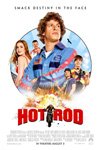
Starring: Andy Samberg, Jorma Taccone, Ian McShane, Isla Fisher
Directed by: Akiva Schaffer
Produced by: Lorne Michaels, John Goldwyn
Written by: Pam Brady
Distributor: Paramount Pictures
Hot Rod is a comedy that my initial artistic sensibilities told me to reject because of its blatant goofiness, but I resisted this notion out of respect for the material’s sheer audacity, and in the process developed a deep respect for its wacky antics. The movie—a joint collaboration of old-time buddies (actors) Andy Samberg, Jorma Taccone, and (director) Akiva Schaffer—could have taken two days to make just as easily as it could’ve taken two-hundred. In truth, I’m not so sure how much care was put into the product; much of Hot Rod’s random humor seems to be improvised, but it’s also too clever and too effective to be dismissed as one big string of throwaway gags. While the picture never amounts to anything in terms of a narrative, the comedy on display here is fresh, innovative, and exciting. Leading-man Samberg and his buddies may not reach a level of comedic mastery at any point in the film’s duration, but the goofy style that they imbue in Hot Rod is enough to show signs of a path that will one day lead them to this.
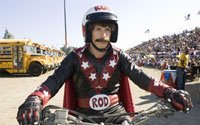
Samberg plays Rod Kimble, a twentysomething still living at home with his naive mother (Sissy Spacek, who must have been bribed Big-Time to appear in this movie), Marie, and competitive stepdad, Frank (Ian McShane). Rod aspires to fill the shoes of his late father, who Rod is told was Evil Kneivel’s daring test-rider, a dangerous profession which led to an untimely death. In order to accomplish this, Rod proclaims himself a stuntman and wanders around his suburban neighborhood lighting himself on fire and attempting to jump across the community pool on his bicycle, among other things. Signs of an actual plot arrive onscreen when Stepdad Frank, who is regarded as a stronger and superior human being than Rod, comes down with a fatal disease which will require a $50,000 heart transplant to fix. Realizing that he will not ever be able to become “stronger” than Frank if Frank is dead, Rod sets out to attempt an unthinkable stunt to raise funds for an operation: motorcycle-jump over fifteen buses, one more than Evil did himself.
Part of Hot Rod’s charm derives itself from the picture’s homemade production values. Samberg and his pals found fame creating “Digital Shorts” for Saturday Night Live, which they assembled themselves using limited filmmaking equipment. Hot Rodis no different: shot on HD cameras, it feels as though it was assembled by a group of friends hoarding around a MacBook Pro during the wee hours of the night in someone’s living room. Strangely, though, the picture remains tightly edited despite its cheaply organic roots; at less than an hour and a half, it remains concise and tautly-paced throughout its full duration. Due to this structural soundness, viewers will appreciate Hot Rod’s strangely-edited delusions and references rather than dismiss them. These work tremendously within the context of what is being presented. Director Schaffer allows anything amusing to enter the final cut: by the time the movie was over, I had picked up on references to everything from David Gordon Green films to random YouTube clips.
While Hot Rod’s brand of comedy may never quite come together to create a complete motion picture, it certainly will elicit a reaction from the viewer. The movie is the quirkiest comedy to enter American multiplexes since Napoleon Dynamite and, at the right moments, it’s very, very funny.
-Danny Baldwin, Bucket Reviews
Review Published on: 8.6.2008
Screened on: 8.4.2008 at the Edwards San Marcos 18 in San Marcos, CA.
Hot Rod is rated PG-13 and runs 88 minutes.