Dear Paul Haggis,
Who do you
think you are?
Your latest
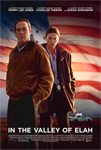
film, In the Valley of Elah, displays such a deep-seeded
hated for the American Military that it could be quite easily
confused for a propaganda-film made by al-Qaeda as a means of
recruiting anti-West terrorists. Through your deceptive
screenwriting and direction, you depict United States
soldiers—the very men who defend your right to sit around and
make films all day—as being sub-human. You would like the
audience to think that there is an inordinate amount of men and
women serving our country that act like kill-happy,
blood-thirsty dogs. You are so desperate to vocalize an
anti-Iraq War “statement” that you are willing to take the easy
way out by blaming these noble human beings for the United
States’ governmental failures. Instead of delving into the
complexities of the country’s Foreign Policy by directly
criticizing the practices of the Bush Administration, an
establishment that can withstand such unwarranted attacks, you
see it necessary to rob the best and brightest American men and
women of their dignity onscreen. Why, Mr. Haggis, must you
pretend as though our military is comprised of killers and
sadomasochists in your film?
Not to mention,
the way that you attack our soldiers in such a cowardly,
self-righteous manner makes the action all the more offensive.
That the first act of In the Valley of Elah pretends to
respect the traditions and the strength of the American Armed
Forces is a damn shame. What a cheap way of suggesting to
unknowing viewers that the film understands the military, as if
to make it seem okay for them to believe the mistaken notion
presented that the organization is full of corrupt and sinful
killers! Additionally, Mr. Haggis, your choice to establish
protagonist Hank Deerfield (Tommy Lee Jones), whose Iraq-veteran
son dies just outside of his home military base, as a man of
nationalist values is disgraceful. It is absolutely disgusting
that you would ever purport that this character, who even goes
as far as to instruct an immigrant Hispanic janitor to hang the
American Flag up backwards during the film’s final scene, is an
admirable dissenter who loves America but despises the Iraq War
and its players.
It should be
duly noted, Mr. Haggis, that I think you to be very talented
man. Your screenplay for Million Dollar Baby is one of
the best ever written, your more-thoughtful meditation on the
consequences of war in Flags of Our Fathers is
illuminating, and your direction Crash packs a punch
despite its considerable flaws. But with great ability comes
great responsibility. You must not continue to abuse your gift,
as you clearly did in making In the Valley of Elah. Your
work here allows passages of the movie to achieve a poetic
style, but what good is poetry when it is defamatory and
hateful? You bring out in Tommy Lee Jones what may be the best
performance of his entire career, but the veteran actor’s
efforts are rendered useless when one considers that they
contribute to a message of resounding hypocrisy.
I will not soon
artistically forgive you for the mean-spirited and downright
wrong attitude that your In the Valley of Elah
exhibits toward the United States Military, Mr. Haggis. You
should be ashamed of yourself for depicting the organization in
the way that you do. But I still realize what a crafty and
influential man you are in the World of Film, and must plead of
you to reconsider your troubling thoughts regarding the American
Troops fighting in Iraq. In the years to come, please fully
realize the social power carried by the images and ideas
captured by your camera.
Sincerely,
Daniel S. Baldwin
Bucket Reviews
Review Published
on: 10.11.2007
Screened on:
9.23.2007 at the Edwards San Marcos 18 in San Marcos, CA.
In the Valley of Elah is rated R and
runs 121 minutes.
Back to Home