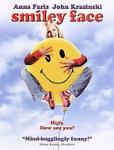
As seen at AFI Fest 2007:
“I’m not sure what it says
about us that we’re showing this movie at 12:15 in the
afternoon, but I know what it says about you,” an AFI Fest
2007-programmer addressed the audience when introducing
Smiley Face. I’m sure that he thought the line sounded
witty, but as I reflect upon it, I realize that it didn’t make
any sense at all. Just what did it say about us audience
members that we showed up to the screening?
Did the
programmer mean to imply that we were diehard fans of director
Gregg Araki’s work and that we were interested to see him take
on a much more farcical subject than he is used to tackling? I
doubt it. Was he accusing us of being junkies who endured the
inhumanity of waking up before Noon because of our devotion to
the cause of stoner-comedy? Given that the movie screened the
night before at 9:45 for said stoners (who were, unquestionably,
still in bed as we watched it) and nearly all of us were visibly
critics, the programmer couldn’t have assumed this to be the
case. As a result, I must assume that he simply wanted to make
the movie sound cooler and more provocative than it really is.
Unfortunately for him, Smiley Face is so utterly mediocre
that no amount of dizzying verbal explanation will ever justify
the festival programming team’s insipid choice to include it in
the 2007 line-up.
Many of
the Smiley Face's fans will probably send me hate e-mails
accusing me of being an elitist who carries a predisposition
against Stoner-Comedy, the genre to which the film belongs.
This, of course, will only go to show that they grossly
misunderstand my criticisms of the picture. I do not object to
stoner-comedies in and of themselves—although I would be
hard-pressed to name one that I liked—but I do object to boring,
conventional movies in general. Smiley Face does nothing
remarkable for the genre and is rarely clever enough to be
considered funny. Araki merely hopes that stoners themselves
will be the only ones watching the movie and will laugh at the
fact that (har de har har) the protagonist is, like them, under
the influence of marijuana.
For me
to describe Smiley Face’s plot would be to reap potential
viewers of any joy that the movie might bring them. The only
amusement to be found in the film exists in its narrative twists
and turns; its delivery is entirely one-note and comes across as
such after the first ten minutes. I will say, however, that the
action begins with amateur-actress stoner Jane (Anna Farris)
accidentally eating her roommate’s pot-cupcakes and ends with
her imperiling herself in one of the cars of a Venice Beach
Ferris Wheel. In between these “critical” plot-points, John
Krasinski and Adam Brody make appearances that are more creepy
than funny as Jane’s roommate’s horny friend and Jane’s
incompetent drug dealer.
There
are a few laughs to be found in Smiley Face, most of
which derive themselves from the nuances of Farris’ all-too-real
performance (was she actually under-the-influence when
filming?), but they are few and far between. For the most part,
the movie fails to prove more inspired than the average
made-for-cable release covering the same subject-matter. Perhaps
the only thing unique about the film is the way that it depicts
drug-addiction: despite making fun of the cannabis-consumption
of its characters, it never glamorizes this to the extent of
other stoner-comedies. Araki, quite competently, shows the
downside of Jane’s recreational use of marijuana. How
unfortunate that he crafts a thoroughly uninteresting picture
for this statement to be a part of. Almost any way you look at
it, Smiley Face is an unexciting example of cinematic
dullsville.
-Danny Baldwin, Bucket Reviews
Review Published on: 11.30.2007
Screened on: 11.11.2007 at the
ArcLight Cinemas in Hollywood, CA.
Smiley Face is rated R and runs 85
minutes.
Back to Home