
FROM THE BUCKET REVIEWS ARCHIVE
Review: Starting out in the Evening
Danny Baldwin · December 23, 2007

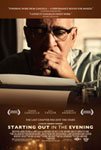
Starring: Frank Langella, Lauren Ambrose, Lili Taylor, Adrian Lester
Directed by: Andrew Wagner
Produced by: Gary Winick, Jake Abraham, Nancy Israel, Fred Parnes, Andrew Wagner
Written by: Fred Parnes, Andrew Wagner
Distributor: Roadside Attractions
Truth be told, there isn’t anything miraculous about Starting out in the Evening in its original state on paper. Sure, the script was competently adapted by Fred Parnes and director Andrew Wagner from Brian Morton’s novel of the same name. But as much emotional insight as Starting out in the Evening provides the viewer into its very human characters, there isn’t anything to distinguish the story itself from the average literate, Manhattan-based family-drama.
Despite the unremarkable nature of his source, Wagner has found a great film in a single component of Starting out in the Evening: Frank Langella’s revelation of a lead performance. When Langella appears onscreen—he does in nearly every scene in the movie—the viewer forgets that they are watching a constructed film. The conventions of the material disappear because Langella makes the viewer believe that real life itself is naturally conventional. His character is merely a man living a continually-aging life, and his story is worth telling for the simple fact that he is an intriguing human and an underappreciated artist.
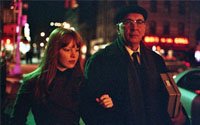
This man is named Leonard Schiller and, affecting as the novels that he writes may be, he has been largely forgotten by the Literary Community. Slowly but surely, Leonard’s work is falling out of print, leaving the shelves of bookstores as he desperately tries to finish a final novel in his old age. Then a woman enters the picture. She is Heather (Lauren Ambrose), a graduate English student who would like nothing more to write her dissertation on Leonard, who has come to inspire her through his little-remembered works. Heather is so enthusiastic about Leonard’s novels that she believes that she can convince her publisher-friend to reproduce them as they go out-of-print.
Leonard hesitantly accepts Heather’s request to submit to weekly interviews because of her nagging persistence. Still, he fears that the time that he would’ve spent writing his novel will be wasted with her. He constantly reminds Heather that he’s getting old, and that he doesn’t have much time to finish the book. She rejects this idea, subtly insisting that he is as alive as ever. Admiration turns into lust, and the two soon become romantically involved, despite their individual reluctance. The relationship arises mainly because Leonard sees the need to fight his embodiment of the image of a “lonely old man.” His wife died traumatically years ago, and his forty-year-old daughter (Lili Taylor) has rekindled a dead-end relationship with a man who does not want to have children (Adrian Lester), much to Leonard’s disdain.
Langella’s work is not only nuanced and complex, it is fearless in a way that one would not expect to find in such benign material. As Leonard, Langella plays a man who is only a bit older than he is in real life. Like the character, Langella himself is a thriving artist whose work is largely unknown to America’s youngest generations. For the actor to draw from his own experiences to play, essentially, a figure not unlike himself who is on the verge of death and questioning his very existence could have been a wholly frightening task. Instead, Langella turns it into an opportunity to create an impeccably-conceived character. Certain scenes in the film’s third act, during which Leonard really begins to lose his health, show particular boldness on Langella’s behalf. (One of which involves Leonard’s daughter’s boyfriend helping him in and out of his bathtub.) In Staring out in the Evening, Langella has given the best performance of the year.
Langella is certainly the highlight of Starting out in the Evening, but the rest of the cast is also exceptional. Lauren Ambroise gives one of my favorite performances of 2007 in the film, as well, perfectly capturing the wide-eyed, university-level intellectualism of Heather. As Heather comes to hold Leonard on a pedestal, only to have her hopes crushed by learning the flaws of his existence, Ambrose internalizes wonderfully. She never abandons the very repose that makes the character who she is, but understands that the young woman’s frustrations and ambitions manifest themselves into dauntingly (and sometimes inappropriately) reckless actions. Lili Taylor, playing another prominent female in Leonard’s life, also puts on a terrific performance. Taylor does a tremendous job of showing how her character is very much her father’s daughter, dealing with many of the same issues in confronting middle-age that he does in coming to terms with old-age.
Starting out in the Evening may not offer an original story in and of itself, but it certainly becomes a highly affecting piece of work due to the many accomplishments of its cast. I’m a big believer in the theory that sometimes even a single aspect of a film can make said film a great one, and that’s definitely the case here. (Still, I should give co-writer/director Wagner some credit for having the considerable ability to bring the project together.) In fact, I would love to see Starting out in the Evening brought to The Stage at some point in time, given how much of an actors’ piece it is. If Frank Langella is overlooked for his performance come Oscar Nominations time, I will find myself severely disappointed in the Academy.
-Danny Baldwin, Bucket Reviews
Review Published on: 12.23.2007
Screened on: 12.18.2007 at the Landmark La Jolla Village in La Jolla, CA.
Starting out in the Evening is rated PG-13 and runs 111 minutes.